Bleeding or pelvic pain that returns after medication, childbirth, a procedure or months of improvement does not automatically mean that a fibroid has come back. You will be able to distinguish recurrence from other causes, understand which tests and treatment routes fit your situation, and prepare for a focused specialist discussion about fibroids treatment in Thane.
Key takeaways
- Reassess recurring symptoms before repeating your previous fibroid treatment.
- Use pelvic ultrasound to check fibroid size, number and location.
- Match treatment to bleeding severity, age, fertility plans and past procedures.
- Ask how each option affects recovery, recurrence and future pregnancy.
What does it mean when fibroid symptoms return?
Choosing fibroids treatment for recurring symptoms in Thane starts with a fresh assessment, not an automatic repeat of the last treatment. Recurrence alone is not always an emergency, but the cause may have changed.
- After medication, bleeding or pressure may return because the medicine controlled symptoms without removing the fibroid.
- After a procedure, an untreated or new fibroid may be responsible; the previous treatment may also have addressed only one source of symptoms.
- After childbirth, changing hormones, an enlarged uterus or a separate condition can produce bleeding and pelvic pressure.
- After months of improvement, returning symptoms need examination and imaging rather than assuming the original fibroid has grown back.
Similar bleeding, pressure or pain can come from adenomyosis, endometriosis, an endometrial polyp, ovarian cysts, thyroid disease or anaemia. Ask for a pelvic examination, transvaginal ultrasound and a complete blood count; persistent heavy bleeding may also require ferritin testing for iron deficiency.
Seek urgent care if you soak a pad or tampon every hour for several hours, feel dizzy or faint, develop shortness of breath or chest discomfort, have severe or rapidly worsening pain, or have a fever.
Do not wait for a routine appointment after a positive pregnancy test with pain or bleeding, or for any postmenopausal bleeding.
Which tests show whether fibroids are really causing the symptoms?
A clinician confirms the cause with a pelvic examination, blood tests and imaging rather than assuming every returning symptom comes from a fibroid. Examination can reveal an enlarged or irregular uterus, while also prompting evaluation for pregnancy, ovarian problems or other pelvic causes.
| Test | What it shows | When it helps |
|---|---|---|
| Pelvic examination | Uterine size, tenderness and irregularity | At the initial assessment |
| Transvaginal ultrasound | Fibroid number, measurements, position and cavity distortion | Usual first imaging test |
| Complete blood count | Haemoglobin and other signs of anaemia | Heavy or persistent bleeding |
| Ferritin | Stored iron levels | Suspected iron deficiency, even without severe anaemia |
| MRI | Detailed uterine anatomy and surgical map | Inconclusive ultrasound, multiple or very large fibroids, or planning myomectomy, hysterectomy or uterine-artery embolisation |
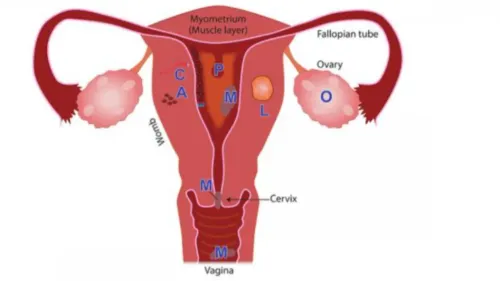
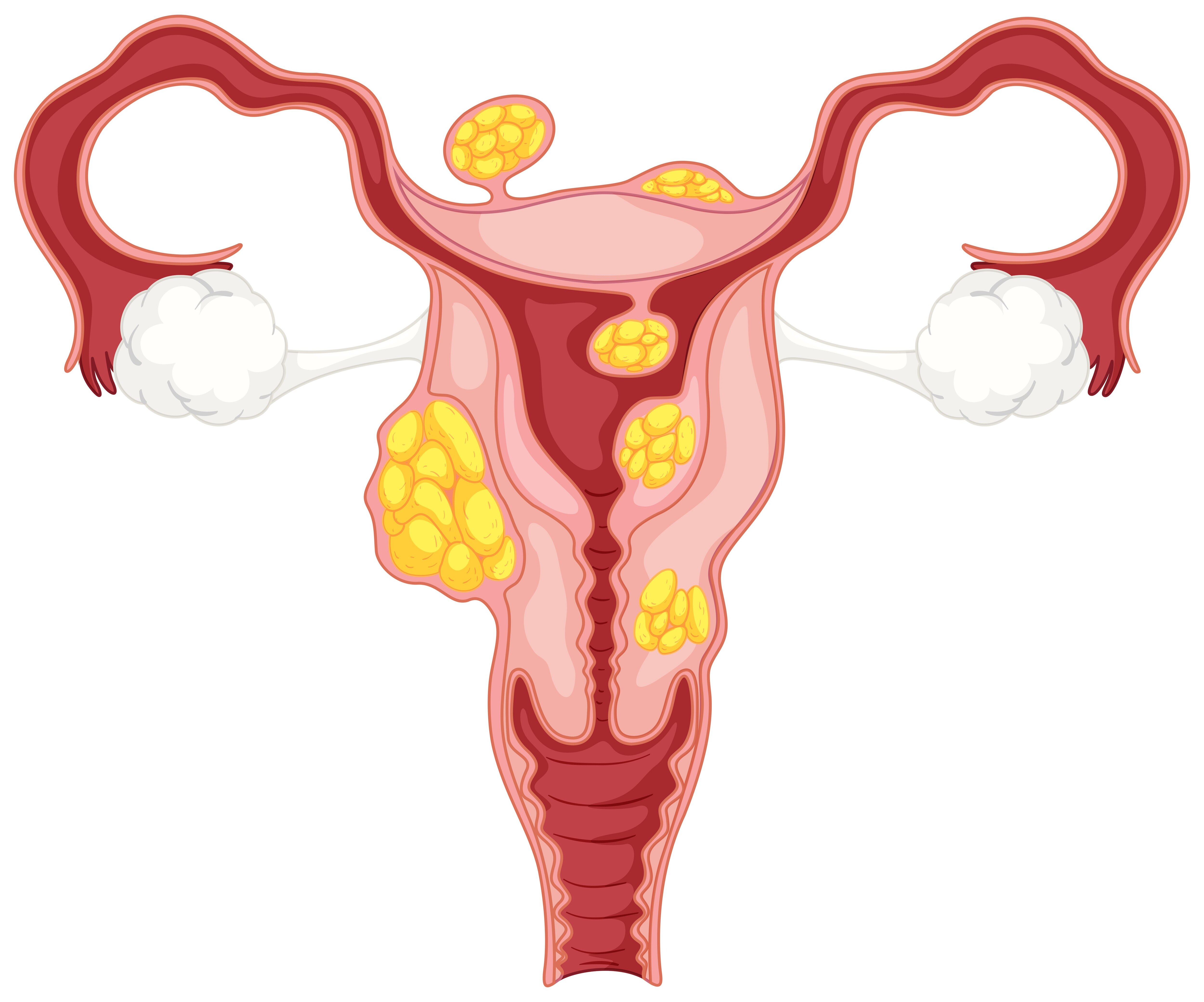
Location can matter as much as size. Submucosal fibroids project into and distort the uterine cavity, making heavy bleeding more likely. Intramural fibroids sit within the uterine wall, while subserosal fibroids project outward and may cause pressure on the bladder or bowel.
Ask the clinician to confirm that the ultrasound report states the number, measurements, location and degree of cavity distortion for each fibroid. If those findings do not explain the bleeding or pain, investigate adenomyosis, endometriosis, an endometrial polyp, ovarian cysts, thyroid disease or anaemia.
A fibroid specialist in Thane can explain whether MRI would change the treatment route.
How do the main fibroids treatment options compare?
Observation is reasonable for mild, stable symptoms after assessment confirms the cause and a blood count shows no significant anaemia. If you are comparing fibroids treatment in Thane, match the option to bleeding, pain, pressure, fibroid location, fertility plans and medical history.
| Option | What it does | When it applies |
|---|---|---|
| Observation | Monitors symptoms and scans without active treatment | Mild, stable symptoms |
| Tranexamic acid or anti-inflammatory medicine | Reduces menstrual blood loss; anti-inflammatory medicines also help pain | Bleeding or pain when the fibroid itself does not need removal |
| Hormonal treatment | A levonorgestrel-releasing intrauterine system, combined hormonal contraception or cyclical oral progestogens can reduce bleeding | Review against fertility plans, migraine, clotting risk and other medical history |
| GnRH agonist | Shrinks fibroids temporarily | Before surgery or near menopause; hot flushes, bone loss and other hypo-oestrogenic effects limit long-term use |
| Hysteroscopic myomectomy | Removes a selected submucosal fibroid through the vagina and cervix | A fibroid projects into and distorts the uterine cavity |
| Laparoscopic or robotic myomectomy | Removes accessible intramural or subserosal fibroids while preserving the uterus | Suitable size, number and position |
| Open myomectomy | Removes a larger, numerous or deeply situated fibroid burden | Minimally invasive access is unsuitable |
| Uterine-artery embolisation | Reduces blood flow to improve bleeding and pressure while preserving the uterus | Discuss possible further treatment and uncertain reproductive outcomes |
| Hysterectomy | Removes the uterus and ends fibroid recurrence | Definitive treatment when carrying a pregnancy is not a goal |
Myomectomy can involve blood loss, adhesions and later recurrence. Hysterectomy ends the ability to carry a pregnancy.
How should your age, fertility plans and previous treatment change the decision?
Age, fertility plans and previous treatment change the acceptable trade-off. Reassess fibroid size, number, location, growth pattern, symptom severity, haemoglobin, pregnancy history, age and future pregnancy plans before choosing another intervention.
A previous myomectomy does not guarantee permanent control. Published studies commonly report recurrence in roughly 15% to 33% of patients over about five years; risk is higher in younger patients and those with multiple fibroids, although estimates vary with follow-up and the definition of recurrence.
Review the operative report because adhesions, scar tissue and the remaining fibroid pattern affect the next route.
| Option | What it offers | When it may fit |
|---|---|---|
| Observation | Avoids treatment burden | Symptoms are mild, haemoglobin is stable and growth is slow |
| Medication | Reduces bleeding or pain without removing fibroids | Symptoms are manageable, or pregnancy is not being attempted now |
| Uterine-artery embolisation | Preserves the uterus and can improve bleeding and pressure | You want a non-surgical uterine option after discussing further treatment and uncertain reproductive outcomes |
| Myomectomy | Removes fibroids while preserving the uterus | Pregnancy is important and the number, location and surgical risk are acceptable |
| Hysterectomy | Definitively prevents fibroid recurrence | Childbearing is complete; it is unsuitable if you want to carry a pregnancy |
Myomectomy carries risks including blood loss, adhesions and later recurrence. Embolisation is not equivalent to myomectomy for every fertility goal. Choose the least burdensome effective option, then reassess promptly if symptoms return.
What should you ask at a fibroid consultation in Thane?
Before booking a fibroid surgery consultation in Thane, assemble records that show what was found, treated and changed:
- Previous ultrasound or MRI reports and image discs
- Operation notes and pathology reports
- A current medication list, including iron tablets and hormonal medicines
- Menstrual records showing bleeding days, clots, flooding and pain
- Pregnancy history, including births, miscarriages and fertility treatment
- A clear statement of whether you want pregnancy now, later or not at all
Ask the fibroid specialist in Thane to identify the fibroid most likely causing each symptom. Do not assume the largest fibroid is responsible; location and cavity distortion can matter more than size.
| Route | What it involves | Question to ask |
|---|---|---|
| Hysteroscopic | Removal through the cervix for selected cavity-facing fibroids | Is the fibroid fully accessible without cutting the uterine wall? |
| Laparoscopic or robotic | Small abdominal incisions for suitable accessible disease | Do my fibroid number, size and previous operations make this safe? |
| Open | A larger abdominal incision for extensive, numerous or deeply placed fibroids | Why is this safer than a minimally invasive route in my case? |
Ask how much bleeding or pressure should improve, how blood loss and transfusion would be managed, and when normal activities can resume. Confirm whether tissue will undergo pathology testing, whether surgery could convert to open surgery, and how the plan changes if symptoms recur.
ASHWINI Maternity & Nursing Home can provide a local setting to review reports, fertility priorities and these trade-offs with a gynaecology-led team. Leave with a documented plan based on your anatomy, not an automatic repeat of prior treatment.
Related service
Fibroids Treatment ₹1000 Ashwini Maternity and Nursing Home, led by experienced gynaecologist Dr. Prasad V. View service → |
Frequently asked questions
What does it mean when fibroid symptoms return?
Returning heavy bleeding, pelvic pressure, pain or urinary symptoms can result from fibroid growth, a new fibroid, incomplete treatment or another condition. Arrange a fresh assessment instead of assuming the original cause is unchanged.
Which tests show whether fibroids are really causing the symptoms?
A pelvic examination and pelvic ultrasound usually establish the fibroids’ size, number and location. Your clinician may also order a complete blood count for anaemia, a pregnancy test when relevant, or MRI when ultrasound does not answer the treatment question.
How do the main fibroids treatment options compare?
Medicines can reduce bleeding or pain without removing fibroids. Procedures such as myomectomy remove fibroids, while uterine artery embolisation reduces their blood supply. Hysterectomy removes the uterus and ends the possibility of pregnancy. The best choice depends on symptoms, fibroid location, health and fertility plans.
How should age, fertility plans and previous treatment change the decision?
Discuss pregnancy plans before choosing a procedure. Myomectomy preserves the uterus but recovery and delivery planning matter; hysterectomy ends fertility. Your age, anaemia, fibroid location and the reason a previous treatment failed all affect the recommendation.
What should you ask at a fibroid consultation in Thane?
Ask which fibroids explain your symptoms, whether you have anaemia, what happens without treatment, how each option affects fertility, expected recovery time, recurrence risk and which warning signs require urgent care.
Keywords